The Nayanars of southern India were poet saints who played an instrumental role between 6th and 8th century AD in popularizing the devotional worship of Siva among the rural people. Through devotional singing and public display of religious fervor, they preached the path of devotion (bhaktimarg) to Siva as an effective means to spread their message of divine love and surrender to God and inculcate among people the habit of religious worship and ethical living. Their activities also helped in containing the influence of Jainism and Buddhism in southern India and reviving the Vedic tradition. The Saiva tradition lists 63 Nayanars. Prominent among them were Kannappa, Karaikkal, Sundarar, Manikkavachakar, Nambi Andar Nambi, Sekkilar, Appar and Sundarar. Their compositions are preserved in such works as Tirumurai and Tevaram. Apart from them, Lakulisa, Vasugupta, Gorakshanath and Basavanna were some of the religious teachers, who played a prominent role in ensuring the continuation of Saivism as a major religious sect in the Indian subcontinent.
Hinduism is the world's oldest extant religion, with a billion followers, which makes it the world's third largest religion. Hinduism is a conglomeration of religious, philosophical, and cultural ideas and practices that originated in India, characterized by the belief in reincarnation, one absolute being of multiple manifestations, the law of cause and effect, following the path of righteousness, and the desire for liberation from the cycle of births and deaths.
Showing posts with label Shaivism. Show all posts
Monday, 29 August 2011
There are many subsects with in Saivism.
While they all acknowledge Lord Siva as the Supreme Deity, they differ from one another in respect of other details such as the modes of worship, nature of Brahman, the nature of individual soul, the relationship between the two, the nature of reality and the means to liberation. These schools of Saivism primarily fall under one of the three schools of Hindu philosophy, namely Advaita (monism), Vishishtadvaita (qualified monism) and Dvaita (dualism). Of the few sects that survived the vicissitudes of time, the following five are the most prominent
1. Pasupata Saivism
2. Kashmiri Saivism
3. Siddha Saivism
4. Gorakhnatha Saivism
5. Vira Saivism
Shaiva Puranas
By the time the Puranas were composed, Lord Siva was recognized as a part of Hindu Trinity and His worship became popular in many parts of the Indian subcontinent. Both the Ramayana and the Mahabharata mention Lord Siva as a prominent Hindu god. Credit goes to the Saiva Puranas, which were composed mostly in the early Christian era, in making Saivism a popular religious sect. Of the 18 Puranas originally composed, six were Shaiva Puranas, namely Siva Purana, Linga Purana, Matsya Purana, Kurma Purana, Skanda Purana and Agni Purana. The Agamas are the most authoritative works on Saivism. They deal with the methods of ritual worship and contemplation of Lord Siva
Shaivism
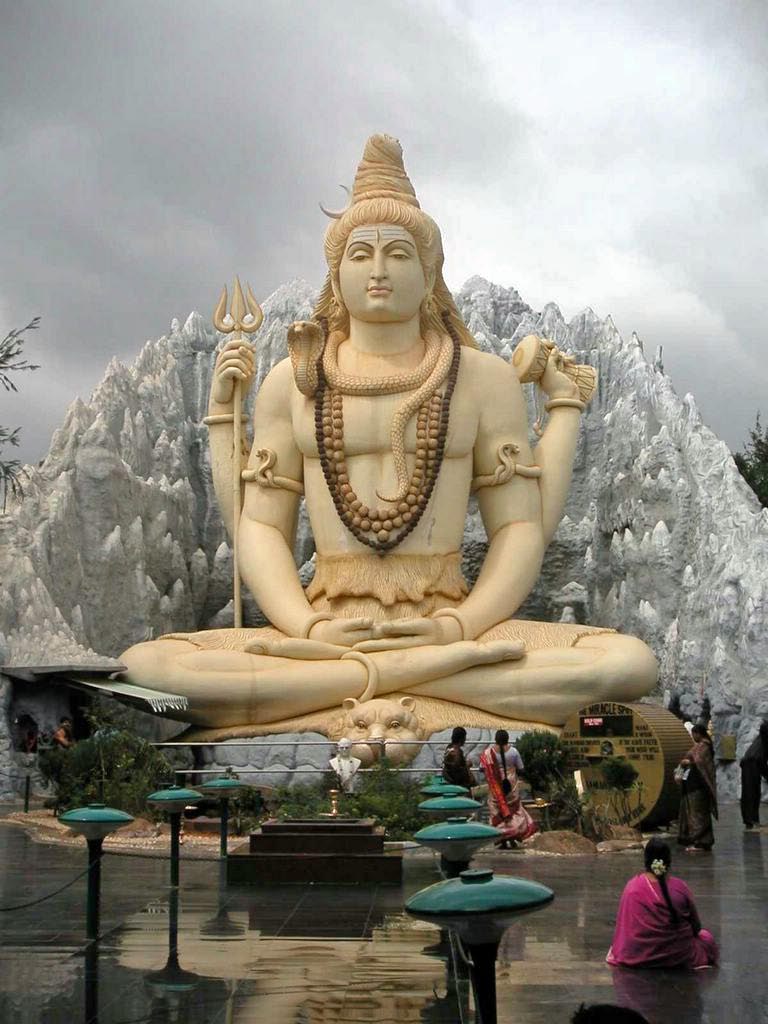
Shaivism or Saivism is the name given to a group of religious traditions which regard Lord Siva, also spelled as Shiva, as the highest Supreme Self or Brahman and worship Him accordingly. It is considered to be one of the oldest, if not the oldest, sect of Hinduism, whose antiquity is said to be rooted in the prehistoric traditions of ancient India, dating back to the Indus Valley civilization (5000 BC) or even earlier. Followers of Saivism are popularly known as Saivas or Saivites. The early Vedic Indians worshipped an aspect of Lord Siva, known as Rudra, whom they both feared and revered. In the later Vedic period some Upanishads emerged, such as the Svetasvatara Upanishad and the Katha Upanishad, in which Lord Siva was depicted as the highest Supreme Brahman. It was also the period during which the Vedic religion underwent a radical transformation where by Vaishnavism, Saivism and Shaktism rose to prominence and the ancient Vedic deities such as Brahma, Indra, Agni and Varuna yielded their place to Vishnu, Siva and Shakti.
Subscribe to:
Posts (Atom)